
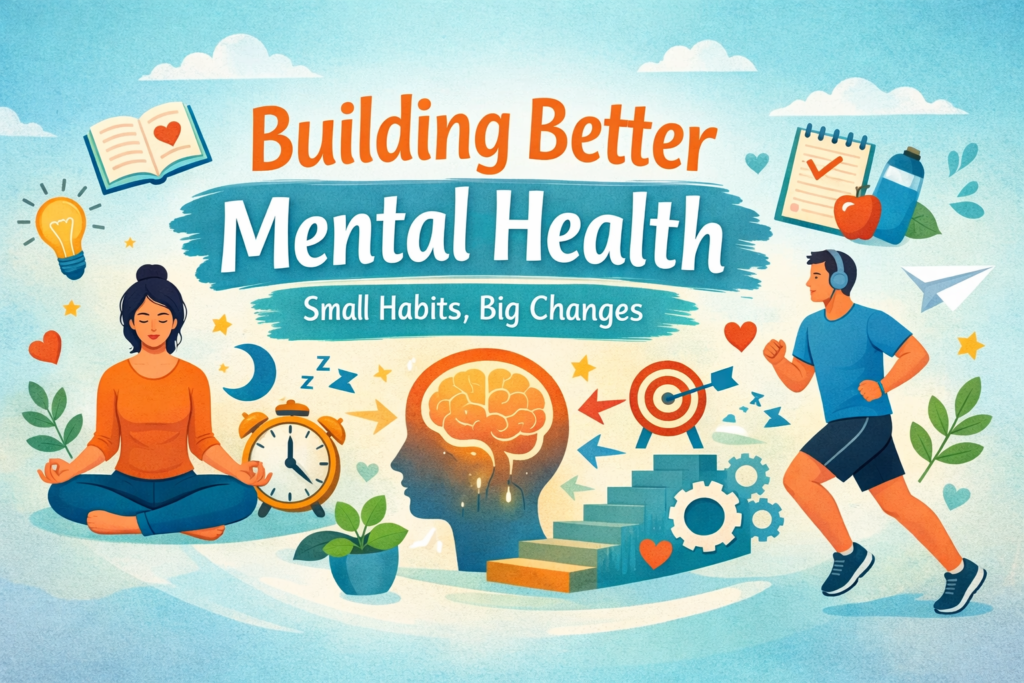
7 powerful mental health habits that change your life are the foundation of a happy and stable existence. Many people wait for a burst of motivation to fix their problems Motivation is often a temporary feeling that comes and goes Real change happens when you implement consistent mental health habits into your daily schedule These wellness routines help your brain stay resilient against stress and anxiety You do not need to change everything at once to see results Small and repeatable behavioral patterns are the key to emotional well-being By focusing on these habits you can rewire your brain for better psychological health This guide will show you exactly how to build a stronger mind and a better life .
1. Build a Consistent Sleep-Wake Rhythm
A consistent sleep schedule is the most basic of all mental health habits Your brain has an internal clock called the circadian rhythm This clock controls your mood energy and focus levels When you sleep at different times every night your brain becomes confused This confusion often leads to increased cortisol levels and higher stress Stable sleep helps your brain process emotions from the day It allows your nervous system to rest and recover deeply People with regular sleep patterns often report lower levels of depression and anxiety You should try to wake up at the same time every day This includes weekends to keep your rhythm steady .
Irregular sleep can quietly ruin your cognitive function and emotional stability If you stay up late one night and sleep in the next your brain feels like it has jet lag This makes it very hard to regulate your emotions You might feel angry or sad for no clear reason Establishing a night time routine signals to your brain that it is time to wind down Avoid bright screens and heavy meals before bed This simple habit creates a strong foundation for all other self-care routines Consistency is much more important than the total number of hours you sleep A steady rhythm tells your body that it is safe and secure .
| Feature of Sleep | Impact on Mental Health |
| Regular Wake Time | Stabilizes daily mood and energy |
| Deep Sleep Cycles | Processes emotional trauma and stress |
| Early Morning Sunlight | Boosts serotonin production naturally |
| Cool Room Temperature | Improves sleep quality and brain rest |
2. Practice Daily Emotional Labeling
Emotional labeling is a powerful way to manage your inner thoughts This habit involves naming the specific emotion you are feeling in the moment When you say “I am feeling frustrated you activate the logical part of your brain This reduces the activity in the amygdala which is the brain’s fear center Many people try to ignore their feelings or push them away Suppressing emotions only makes them stronger and more toxic over time Emotional intelligence grows when you acknowledge your feelings without judging them This practice helps you stay in control during difficult situations It prevents your emotions from overwhelming your daily life .
Learning to name what you feel improves your mental resilience significantly You might feel a mix of many emotions like “anxious lonely or “overwhelmed Being specific helps you understand the root cause of your stress For example if you label a feeling as professional inadequacy you can address the specific work issue This is much better than just feeling “bad” in a general way Over time this habit creates a gap between a feeling and an action You become less reactive and more thoughtful in your relationships This is a core part of mindfulness practice that anyone can do anywhere It is a simple tool for long-term psychological balance .
3. Move Your Body for Mental Resilience
Exercise is often discussed as a way to lose weight or build muscle However movement is one of the most effective mental health habits for your brain Physical activity releases chemicals like endorphins and dopamine These chemicals act as natural mood lifters You do not need to run a marathon to get these benefits Even a short walk can reduce the habit of rumination or overthinking Movement helps clear the “mental fog” that often comes with high stress It gives your mind a break from the constant stream of digital information Consistency in movement builds a sense of mastery and confidence .
Focusing on movement for mood removes the pressure of perfection Many people quit exercising because they do not see physical changes quickly When you move for your mind the benefits are almost immediate You feel more relaxed and less irritable after just twenty minutes of activity Stretching or yoga can also help release tension stored in the body The body and mind are deeply connected in a constant feedback loop If your body is active your mind feels more capable of handling life This habit is essential for maintaining long-term wellness It is a natural way to fight the symptoms of chronic stress .
“Mental health is not a destination but a process It’s about how you drive not where you’re going” — Noam Shpancer PhD
4. Reduce Mental Noise Through Digital Boundaries
We live in a world of constant digital noise and endless notifications This high level of input can easily overload your nervous system Constant scrolling on social media often leads to social comparison and anxiety Creating digital boundaries is a vital habit for protecting your peace You should decide when you will check your phone and when you will put it away For example do not check emails or social media for the first hour of the day This allows your mind to start the day with its own thoughts Reducing screen time improves your focus and reduces brain fatigue .
Setting limits on technology helps you reclaim your mental energy You might choose to turn off all non-human notifications on your phone This means only seeing messages from real people not apps Digital boundaries prevent your brain from being in a constant state of high alert This constant alertness can lead to adrenal fatigue and irritability When you control your digital environment you reduce the triggers for anxiety You have more time for deep thinking and meaningful hobbies This habit is a form of digital detox that supports your overall brain health It is a necessary step in the modern world to maintain sanity .
| Digital Boundary | Benefit to Mind |
| No phones during meals | Improves connection and digestion |
| App time limits | Reduces mindless scrolling and envy |
| No screens 1 hour before bed | Enhances melatonin and sleep quality |
| Weekend tech breaks | Restores focus and mental clarity |
5. Strengthen Social Safety Through Intentional Connection
Humans are social creatures by nature and we need others to survive Isolation is a major risk factor for poor psychological health Building intentional connections is about the quality of your relationships not the quantity You need people in your life who make you feel safe and heard This social safety acts as a buffer against life’s greatest stresses Even introverts need a few close bonds to feel emotionally secure Make it a habit to reach out to a friend or family member regularly A simple phone call or a coffee date can change your entire mood Social support is a key pillar of mental resilience .
Trust and consistency are the foundations of healthy connection You should spend time with people who support your personal growth Avoid relationships that consistently drain your energy or cause you distress Intentional connection also involves being a good listener for others This reciprocal relationship creates a sense of belonging and purpose When you share your struggles with others they often feel less heavy This habit prevents the feeling of being alone in your problems It fosters emotional intimacy and builds a strong safety net for your mind Healthy social habits are essential for a long and happy life .
6. Train Your Mind to Interrupt Negative Thought Loops
Your thoughts directly influence how you feel and how you behave Many people suffer from automatic negative thoughts that repeat in their minds These thought loops can create a cycle of sadness and hopelessness Training your mind to notice these loops is a life-changing mental health habit You can use a technique called “thought challenging” to check if your thoughts are true Often our fears are based on assumptions rather than facts When you catch a negative thought ask yourself for evidence This habit helps you develop a more realistic perspective on life .
Building this habit takes time and regular practice You are not trying to force “positive thinking” on yourself Instead you are aiming for mental flexibility and accuracy You can imagine your thoughts as clouds passing in the sky You notice them but you do not have to follow them or believe them This creates a sense of cognitive defusion where you are separate from your thoughts This habit is very effective for reducing anxiety and rumination It gives you the power to choose how you respond to your own mind Over time you will find that negative thoughts have less power over you .
7. Create a Sense of Meaning Through Daily Purpose
A life without purpose can lead to feelings of emptiness and boredom Purpose does not have to be a grand or famous mission It can be found in small daily acts that align with your core values Creating a sense of meaning is one of the most profound mental health habits This could be as simple as helping a neighbor or learning a new skill When you have a reason to get out of bed your motivation levels naturally increase Purpose provides a direction for your energy and a reason to keep going It helps you stay resilient when you face unavoidable life challenges .
Meaning is different from productivity or being busy You can be very busy but still feel like your life lacks purpose. To build this habit identify what truly matters to you Is it family creativity kindness or learning? Try to do one small thing every day that reflects that value This creates a feeling of self-efficacy and personal satisfaction People with a strong sense of purpose often live longer and have better mental health It transforms your daily routine from a chore into a meaningful journey This habit is the final piece of the puzzle for a flourishing life .
| Purpose Category | Daily Example |
| Connection | Helping a friend with a small task |
| Learning | Reading 5 pages of a non-fiction book |
| Contribution | Volunteering or donating to a cause |
| Creativity | Spending 10 minutes on a hobby |
How These 7 Habits Work Together
These 7 powerful mental health habits that change your life do not work in isolation They are like pieces of a machine that help each other run smoothly For example better sleep makes it easier to manage your thoughts Regular movement gives you the energy to connect with friends When you have a sense of purpose you are more likely to set digital boundaries This is known as the compounding effect of habits Over time these small actions build a very strong foundation for your mind You start to feel more “solid” and less affected by small setbacks .
Consistency is the most important part of this entire process You do not need to do all seven habits perfectly every single day If you miss a day simply start again the next morning without guilt The goal is to make these actions as automatic as brushing your teeth As these habits become part of your identity your mental health will naturally improve You will notice that you recover from stress more quickly Your overall level of happiness will become more stable and less dependent on outside events This is the power of building a life based on healthy routines .
Common Myths About Mental Health Habits
Many people believe that they need a lot of willpower to change This is a common myth that stops people from even trying Habit formation is actually about making things easy not about using force Another myth is that you must always “think positive” to be mentally healthy This is not true because healthy minds still experience sad or angry thoughts The goal is to handle those thoughts well not to delete them Some believe that mental health habits are a quick fix for deep problems In reality these habits are long-term tools for management and growth .
Another myth is that self-care is selfish or a waste of time Taking care of your mind allows you to be a better person for everyone else If your “cup” is empty you cannot pour into others Some also think that you need expensive equipment or therapy to start Most of the best wellness habits are free and can be done at home You only need a willingness to try and a bit of patience Understanding these myths helps you stay focused on what really works It removes the unnecessary pressure that often leads to failure.
Case Study: Sarah’s Transformation
Sarah was a 30-year-old office worker who felt constant burnout and anxiety She spent her evenings scrolling through her phone and her mornings feeling exhausted Her mental health habits were non-existent and she felt stuck in a cycle of stress Sarah decided to start with just two habits: a consistent wake time and digital boundaries She stopped using her phone after 9 PM and woke up at 7 AM every day After two weeks her morning brain fog began to lift She felt more in control of her time and less reactive to work stress .
Next Sarah added a twenty-minute walk during her lunch break This movement helped her process the frustrations of the morning She also started labeling her emotions during stressful meetings Instead of feeling “angry” she realized she felt “unappreciated” This clarity allowed her to have a calm conversation with her boss Within three months Sarah’s friends noticed she was more relaxed and cheerful She did not change her job or her life circumstances She only changed her daily routines Sarah is a great example of how small habits lead to massive life changes .
How to Start Without Feeling Overwhelmed
The best way to start is to pick just one habit from this list Do not try to change all seven things at the same time.This often leads to failure and a sense of defeat Choose the habit that feels the easiest or the most urgent for you For many starting with sleep or movement is the most effective Once that habit feels natural you can “stack” another one on top of it For example you can practice emotional labeling while you take your daily walk This makes it easier for your brain to adopt new behavioral patterns .
Track your progress in a simple way to stay motivated You can use a calendar to mark the days you completed your habit Remember that progress in mental health is not always a straight line You will have good days and bad days and that is perfectly normal The key is to keep showing up for yourself regardless of how you feel Small wins build the confidence you need for bigger changes Over time these positive routines will become your new normal You are building a better version of yourself one small habit at a time .
Conclusion
Building 7 powerful mental health habits that change your life is a journey of self-love These habits are not just tasks to finish; they are tools for a better existence By focusing on sleep movement and your thoughts you regain control over your happiness Consistency will always beat intensity when it comes to mental health Your brain is capable of changing and growing at any age Be patient with yourself as you build these new positive routines You deserve to live a life that feels peaceful and full of meaning .
FAQs
1. How long does it take for mental health habits to work?
Most people notice a difference in their mood within two to four weeks of consistency However some benefits like reduced stress from movement can happen almost immediately.
2. Can these habits replace professional therapy?
These habits are powerful tools for mental wellness but they are not a replacement for medical advice If you are struggling deeply please consult a therapist or doctor .
3. What is the most important mental health habit?
Sleep is often considered the most important because it affects every other part of your brain function Without good sleep it is very hard to manage thoughts or emotions .
4. Do I have to do these habits every single day?
Consistency is key but perfection is not required Aim for “most days” rather than “every day” to avoid feeling overwhelmed or guilt.
5. Can children and teens practice these habits?
Yes, these wellness routines are beneficial for people of all ages Starting young helps build a strong foundation for lifelong psychological health .
