
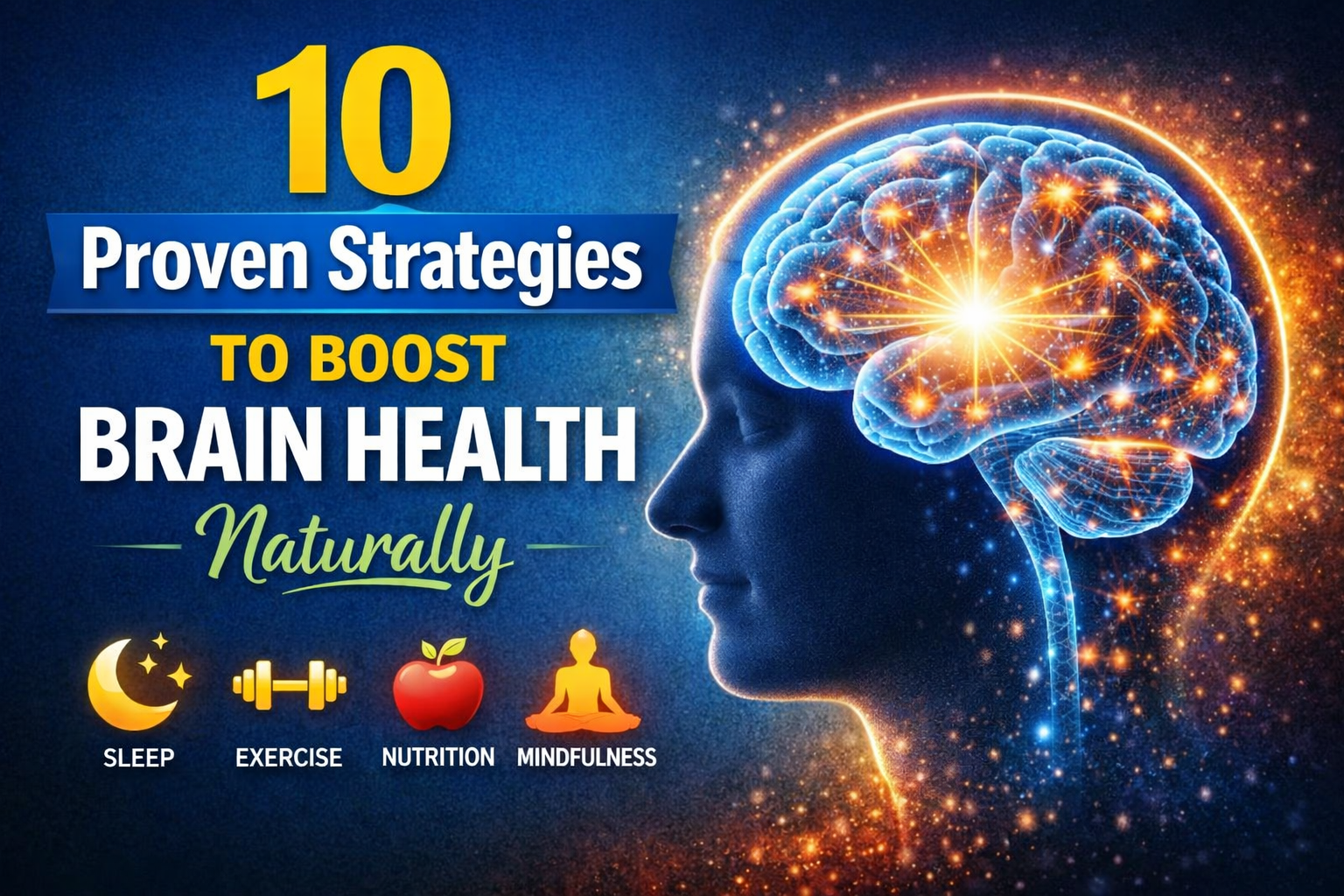
Proven Strategies For many years, people believed that the adult brain was fixed and could not change. However, modern science has revealed that you can boost brain health naturally through a process called neuroplasticity. This means your brain can actually rewire itself and grow new connections even as you get older. By focusing on optimizing performance instead of just preventing decline, you can unlock better memory and focus. This article explores 10 evidence-based lifestyle levers that help you maintain a sharp and healthy mind for a lifetime.
1. Leverage the MIND Diet for Brain Longevity
The way you eat has a massive impact on your mental clarity. The MIND diet is a special way of eating that combines the best parts of the Mediterranean and DASH diets. Researchers found that this specific combination is better at protecting your brain than any other diet. It focuses on foods that lower inflammation and keep your blood vessels healthy. When you eat more leafy greens and berries, you are giving your brain the raw materials it needs to function at its best.
This diet is not about restriction but about adding the right nutrients. By eating things like beans, poultry, and olive oil, you reduce the risk of cognitive decline significantly. The synergy between these foods helps to protect your neurons from damage over time. It is one of the most effective ways to boost brain health naturally because it works on a cellular level every single day.
| Food Category | Recommended Frequency | Brain Benefit |
| Leafy Greens | At least 6 servings per week | High in Vitamin K and folate |
| Berries | At least 2 servings per week | Rich in antioxidants |
| Nuts | 5 servings per week | Healthy fats and Vitamin E |
| Olive Oil | Use as primary oil | Reduces brain inflammation |
| Whole Grains | 3 servings per day | Steady energy supply |
2. High-Dose Omega-3s as Neuronal Building Blocks
Your brain is about 60% fat, and a large portion of that is made of Omega-3 fatty acids. Specifically, DHA and EPA are the literal building blocks of your neuronal membranes. Without enough of these fats, your brain cells cannot communicate efficiently with each other. This can lead to brain fog and a slower processing speed as you age. Consuming high doses of these healthy fats ensures that your brain’s “wiring” remains flexible and strong.
To get the best results, you should focus on “SMASH” fish, which includes Sardines, Mackerel, Anchovies, Salmon, and Herring. These fish are excellent because they are high in Omega-3s but very low in mercury. Mercury is a heavy metal that can actually harm your brain, so choosing these smaller fish is a smart move. Consistent intake of these fats is a cornerstone strategy to boost brain health naturally and keep your memory sharp.
3. Polyphenol Power and the Blood-Brain Barrier
Polyphenols are special compounds found in plants that act like a shield for your brain. Flavonoids, which are found in dark berries and 70% dark chocolate, are especially powerful. These compounds are unique because they can actually cross the blood-brain barrier. Once inside, they work to neutralize oxidative stress and protect your cells from toxins. This helps to keep your cognitive “hardware” running smoothly without unnecessary wear and tear.
Studies have shown that people who eat more colorful fruits and vegetables have better memory scores. Dark chocolate is a favorite among many because it increases blood flow to the brain almost immediately. By including a small amount of dark chocolate or a handful of blueberries in your daily routine, you provide a constant stream of protection. This simple habit is a delicious way to boost brain health naturally while enjoying your food.
4. Activate the Glymphatic System During Deep Sleep
Many people think sleep is a passive state, but it is actually when your brain does its most important cleaning. The glymphatic system is often called the “brain’s dishwasher.” It only turns on during deep, NREM sleep to flush out toxic waste like amyloid-beta plaques. If you do not get enough deep sleep, these toxins build up and can eventually lead to memory loss and disease. Prioritizing sleep is perhaps the most underrated way to boost brain health naturally.
To make this system work better, you should try to keep a consistent sleep schedule. Avoiding caffeine late in the day and keeping your bedroom cool can help you reach those deep stages of sleep more easily. When you wake up feeling refreshed, it is usually because your glymphatic system successfully cleaned your brain overnight. Think of sleep as a mandatory maintenance session for your 3-pound supercomputer.
5. The Side-Sleeping Advantage for Waste Clearance
The position in which you sleep might be just as important as how long you sleep. New research suggests that sleeping on your side, also known as the lateral position, may enhance waste clearance. This position allows the glymphatic system to move fluid through the brain more efficiently than sleeping on your back or stomach. It is a simple adjustment that could have long-term benefits for your cognitive health.
Most people naturally prefer side sleeping, but if you don’t, it might be worth trying to switch. Using a supportive pillow can make this transition more comfortable for your neck and spine. By optimizing your physical posture at night, you are supporting the biological processes that keep your brain clean. This is a practical and easy tip to boost brain health naturally without spending any money.
6. Cortisol Control via the “Nature Pill”
High levels of stress can actually shrink the hippocampus, which is the part of your brain responsible for memory. This happens because of a hormone called cortisol. When you are constantly stressed, cortisol stays high and damages your brain cells. However, you can lower this hormone by taking what scientists call a “nature pill.” Spending just 20 minutes in a green space, like a park or a forest, measurably lowers your stress levels.
Nature has a calming effect on the nervous system that technology simply cannot replicate. Even looking at trees or feeling the sun on your skin sends signals to your brain to relax. This reduction in stress allows your brain to shift from “survival mode” to “growth mode.” Taking a short walk outside every day is a powerful habit to boost brain health naturally and protect your emotional well-being.
| Stress Factor | Impact on Brain | Natural Solution |
| High Cortisol | Shrinks the hippocampus | 20 minutes in nature |
| Chronic Anxiety | Weakens neural paths | Deep breathing exercises |
| Lack of Breaks | Causes mental fatigue | Short walks in green space |
7. The BDNF “Miracle-Gro” Effect of Exercise
Aerobic exercise is one of the best things you can do for your mind. When you get your heart rate up, your brain releases a protein called Brain-Derived Neurotrophic Factor, or BDNF. Scientists often call BDNF “Miracle-Gro” for the brain because it helps repair damaged cells and grow brand-new ones. This process is essential for maintaining a high level of mental performance as you age.
You don’t need to run a marathon to see these benefits; even a brisk walk or a light jog is enough to trigger the release of BDNF. The key is consistency and getting your blood pumping. Movement increases oxygen flow to the brain, which helps you think more clearly and stay focused. Incorporating regular physical activity is a guaranteed way to boost brain health naturally and feel more energetic.
8. Dual-Task Training for Robust Neural Pathways
While walking is great, combining movement with mental effort is even better. This is called dual-task training. Activities like dancing, playing tennis, or even walking while listening to a complex podcast force your brain to work harder. You are using your motor skills and your cognitive skills at the same time. This creates much more robust neural pathways than doing a mindless task on a treadmill.
When you challenge your brain and body simultaneously, you are building “cognitive reserve.” This reserve acts as a buffer against aging. Think of it like cross-training for your mind. Whether it is learning a new dance routine or navigating a new hiking trail, these challenges are vital. Seeking out these complex activities is a fun way to boost brain health naturally every day.
9. Targeted Novelty Over Simple Brain Games
Many people spend hours on “brain games” or Sudoku, but science shows that these may not be the most effective tools. To really change your brain, you need targeted novelty. This means learning a skill that is completely new and challenging, like a foreign language or a musical instrument. These activities force the brain to build entirely new structural connections rather than just practicing an old skill.
The “struggle” of learning something new is actually where the growth happens. When you feel a bit frustrated while practicing a new language, that is your brain rewiring itself. This deep engagement is far more powerful than repeating the same puzzles every day. Embracing lifelong learning is a core pillar for anyone looking to boost brain health naturally and stay sharp into old age.
10. The Social Cohesion Factor as a Neuroprotective Shield
Human beings are social creatures, and our brains thrive on connection. Scientific data shows that meaningful human interaction acts as a “neuroprotective shield.” People who have strong social ties are less likely to experience cognitive decay. Conversations require you to listen, process information, and respond quickly, which is a massive workout for your frontal lobe.
Spending time with friends or volunteering in your community provides emotional support that lowers stress. Isolation, on the other hand, is linked to higher rates of memory loss. Even a simple phone call or a coffee date can make a big difference in how your brain functions. Prioritizing your relationships is a beautiful and essential way to boost brain health naturally.
| Social Activity | Cognitive Benefit | Why it Works |
| Group Volunteering | Improved Executive Function | Requires planning and empathy |
| Book Clubs | Better Language Skills | Encourages deep discussion |
| Family Dinners | Lower Stress Levels | Provides emotional security |
Case Study: The Power of Lifestyle Changes
A 65-year-old woman named Martha began noticing she was becoming more forgetful. Instead of accepting it as “just getting old,” she decided to boost brain health naturally by changing her habits. She started the MIND diet, began taking a daily 20-minute walk in a nearby park, and joined a local choir to learn music. Within six months, Martha reported feeling more “switched on” and scored significantly higher on memory tests. Her story shows that the brain is resilient and responds quickly to positive lifestyle levers.
“The brain is a muscle that grows stronger with use, not a vessel that simply empties with age.” — Anonymous
Conclusion
To boost brain health naturally, you do not need to change your entire life overnight. It is about the compound effect of small, consistent shifts. By choosing better foods, prioritizing sleep, and staying active, you support your brain’s natural ability to repair itself. Your brain is a dynamic organ that responds to how you treat it every single day. Start by picking one strategy for rest and one for growth this week. These small steps will lead to a lifetime of better boost brain health naturally results.
FAQs
1. What is the best food to boost brain health naturally?
Fatty fish like salmon and leafy greens like spinach are often considered the best foods because they provide essential fats and vitamins that reduce inflammation and build brain cells.
2. How much sleep do I need to clean my brain?
Most adults need between 7 and 9 hours of sleep to ensure the glymphatic system has enough time to fully flush out toxins and plaques from the brain.
3. Can exercise really grow new brain cells?
Yes, aerobic exercise triggers the release of BDNF, a protein that supports the growth of new neurons and strengthens the connections between existing ones.
4. Are brain games better than learning a new language?
Generally, learning a new language or instrument is more effective because it requires more complex structural changes in the brain compared to simple, repetitive games.
5. How does stress affect my memory?
High levels of the stress hormone cortisol can damage and even shrink the hippocampus, which is the primary center for memory and learning in the brain.





One response to “10 Proven Strategies to Boost Brain Health Naturally”
[…] for about 25 percent of how long we live. The rest of the power lies in our hands through our lifestyle choices and daily actions. When you choose to eat well or walk more, you are sending positive signals to […]