
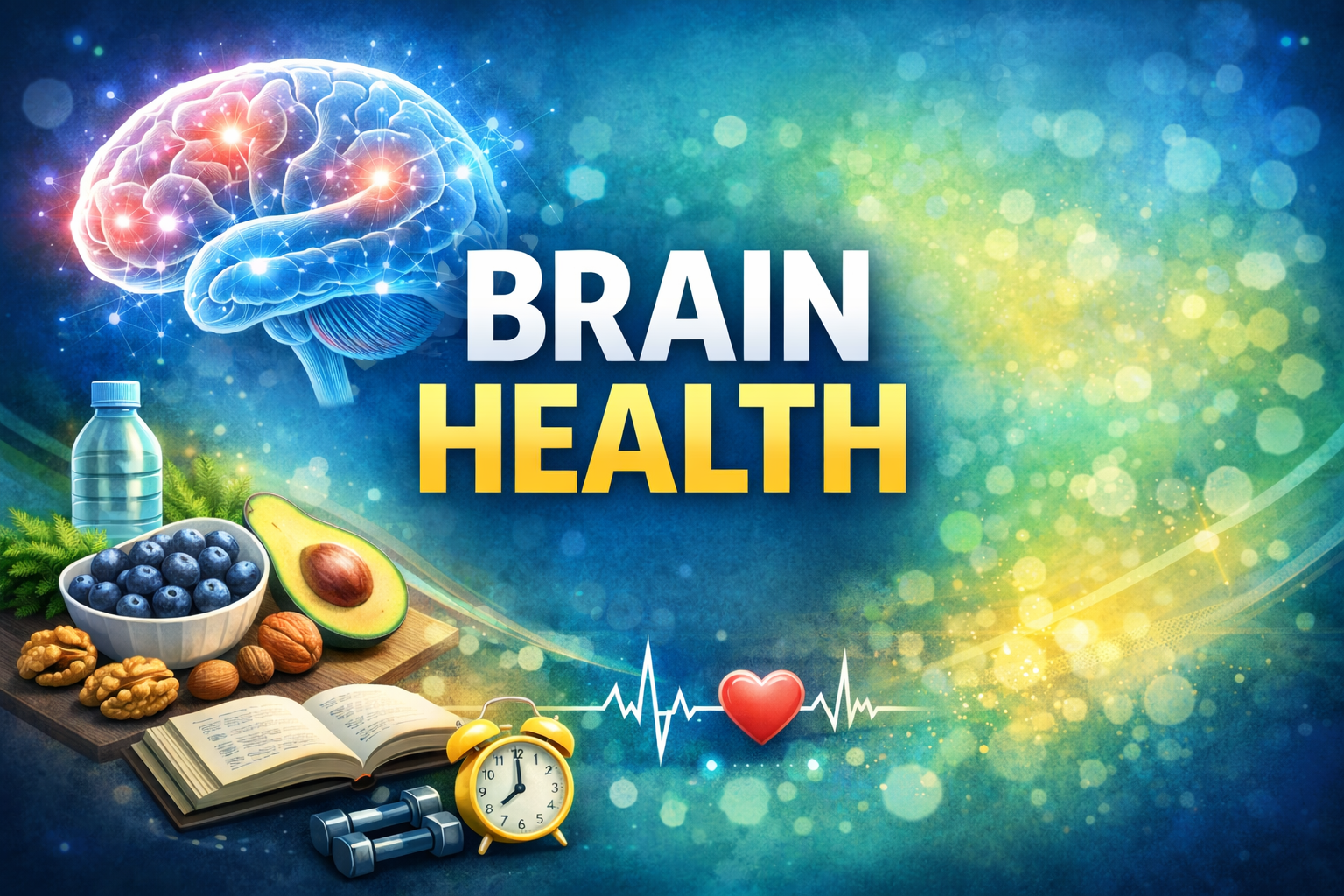
Brain Health shapes how you think, feel, decide, and remember each day. Most people believe brain decline starts late in life. That belief is wrong. Daily habits quietly shape brain health from your teens onward. Poor sleep, stress, sugar spikes, and endless scrolling all leave marks on your brain.
Over time, these small hits add up. Cognitive health, mental clarity, memory strength, and focus ability all depend on how well your brain stays protected. This guide explains how your brain works, what damages it, and how to protect it long term. You will learn real science, not hype. You will also learn habits that compound benefits over years. Your brain is not fragile. However, it is honest. It reflects how you treat it.
1. What Brain Health Actually Means
Brain health means your brain processes information clearly and efficiently. It controls memory, attention, learning speed, emotional balance, and decision making. When brain health is strong, thinking feels sharp and stable. When it weakens, daily tasks feel harder.
Mental health relates to mood and emotions. Brain health relates to structure, blood flow, and neural communication. Both overlap. However, they are not the same. Strong cognitive function supports emotional control and resilience.
2. How the Brain Works for Brain Health
Your brain works through billions of neurons. These cells send electrical signals through connections called synapses. Each thought strengthens or weakens these connections. This process supports neuroplasticity, which allows change at any age.
The brain uses oxygen and glucose constantly. It consumes nearly twenty percent of your body’s energy. Poor blood flow or unstable blood sugar quickly reduces brain performance and focus.
3. Early Signs of Declining Brain Health
Early warning signs often feel subtle. Forgetting names, losing focus mid-task, and slow thinking appear first. Many people ignore these signs. That delay allows deeper damage.
Mood changes also matter. Increased irritability, anxiety, or emotional numbness often reflect neurological stress. Brain fog is not normal aging. It is a signal.
4. Modern Threats to Brain Health
Chronic stress floods the brain with cortisol. This hormone damages memory centers over time. Sleep loss prevents waste removal from brain tissue. This accelerates cognitive decline.
Ultra-processed foods disrupt insulin signaling. That harms neuron energy use. Inactivity reduces cerebral blood flow. Constant digital switching weakens attention control and working memory.
5. Nutrition That Supports Brain Health
Your brain runs on stable glucose. Sudden sugar spikes create mental crashes. Healthy fats form neuron membranes. Omega-3 fats improve signal speed and resilience.
Key nutrients include magnesium, B vitamins, iron, iodine, zinc, and choline. Dehydration disrupts electrical signaling. Alcohol and refined sugars consistently harm brain health.
| Nutrient | Brain Role | Food Sources |
| Omega-3 | Neuron structure | Fatty fish, walnuts |
| Magnesium | Signal regulation | Leafy greens |
| Choline | Memory formation | Eggs |
6. Sleep and Brain Health Repair
During deep sleep, memories consolidate. Learning becomes permanent. The brain also clears metabolic waste through the glymphatic system. This protects against neurodegeneration.
Chronic sleep loss shrinks attention span and emotional control. Long term deprivation increases dementia risk. Sleep is not rest. It is active brain maintenance.
7. Exercise and Blood Flow for Brain Health
Movement increases brain-derived neurotrophic factor. This chemical supports neuron growth and survival. Aerobic exercise improves memory and processing speed.
Walking counts. Consistency matters more than intensity. Strength training also supports insulin sensitivity and hormone balance that protects cognitive health.
| Activity | Brain Benefit | Frequency |
| Walking | Blood flow | Daily |
| Aerobic | Memory | Weekly |
| Strength | Hormone balance | Weekly |
8. Stress, Anxiety, and Brain Health Decline
Chronic stress shrinks the hippocampus. This region controls memory formation. Over time, learning becomes harder.
Nervous system regulation restores balance. Slow breathing, sunlight exposure, and social safety cues reduce cortisol. Calm states protect brain health better than motivation alone.
9. Mental Stimulation and Neuroplasticity
Passive scrolling does not strengthen the brain. Active learning does. Reading, problem solving, writing, and skill building create new neural pathways.
Social interaction challenges memory, language, and emotional processing. Isolation accelerates decline. Conversation protects cognition.
10. Brain Health Across Life Stages
During youth, the brain builds structure. Poor habits here set limits. In adulthood, cognition peaks. Protection maintains that peak longer.
Later life focuses on slowing decline. Prevention always works better than treatment. Brain health compounds over decades.
11. Supplements and Brain Health Facts
Some supplements help. Many do not. Evidence supports omega-3s, creatine, magnesium, and B12 for deficiencies.
Supplements support habits. They never replace sleep, nutrition, movement, or stress control. Safety and dosage always matter.
12. Brain Health and Disease Prevention
Dementia risk links strongly to lifestyle. Blood pressure, insulin resistance, inactivity, and poor sleep all increase risk.
Cardiovascular health directly supports cognition. The brain depends on vessels. Protecting the heart protects the mind.
| Risk Factor | Effect on Brain | Modifiable |
| Hypertension | Reduced blood flow | Yes |
| Sleep loss | Toxin buildup | Yes |
| Inactivity | Low BDNF | Yes |
13. Daily Habits That Build Brain Health
Small actions compound. Regular sleep timing stabilizes hormones. Balanced meals protect glucose control. Daily movement sustains blood flow.
Stopping multitasking immediately improves attention span. Consistency beats intensity every time.
Conclusion
Brain Health is daily maintenance, not emergency repair. Every habit either strengthens or weakens your brain. Prevention starts early and pays lifelong dividends. Protecting sleep, nutrition, movement, learning, and stress response builds lasting cognitive health. Your brain records patterns honestly. Treat it like the asset it is. The earlier you start, the greater the return.
FAQs
1. What is the fastest way to improve brain health?
Improving sleep quality provides the fastest measurable gains in focus and memory.
2. Can brain health improve at any age?
Yes. Neuroplasticity allows improvement throughout life.
3. Does sugar really harm brain health?
Yes. Chronic glucose spikes impair neuron energy use.
4. Is brain health different from mental health?
Yes. Brain health focuses on structure and function. Mental health focuses on mood.
5. Are supplements necessary for brain health?
No. They only help when deficiencies exist.





One response to “Brain Health: How Your Brain Functions, What Harms It and How to Protect It for Life”
[…] foods helps to protect your neurons from damage over time. It is one of the most effective ways to boost brain health naturally because it works on a cellular level every single […]